The Ever-Evolving World of Gaming: A Journey Through Pixels, Passion, and Progress
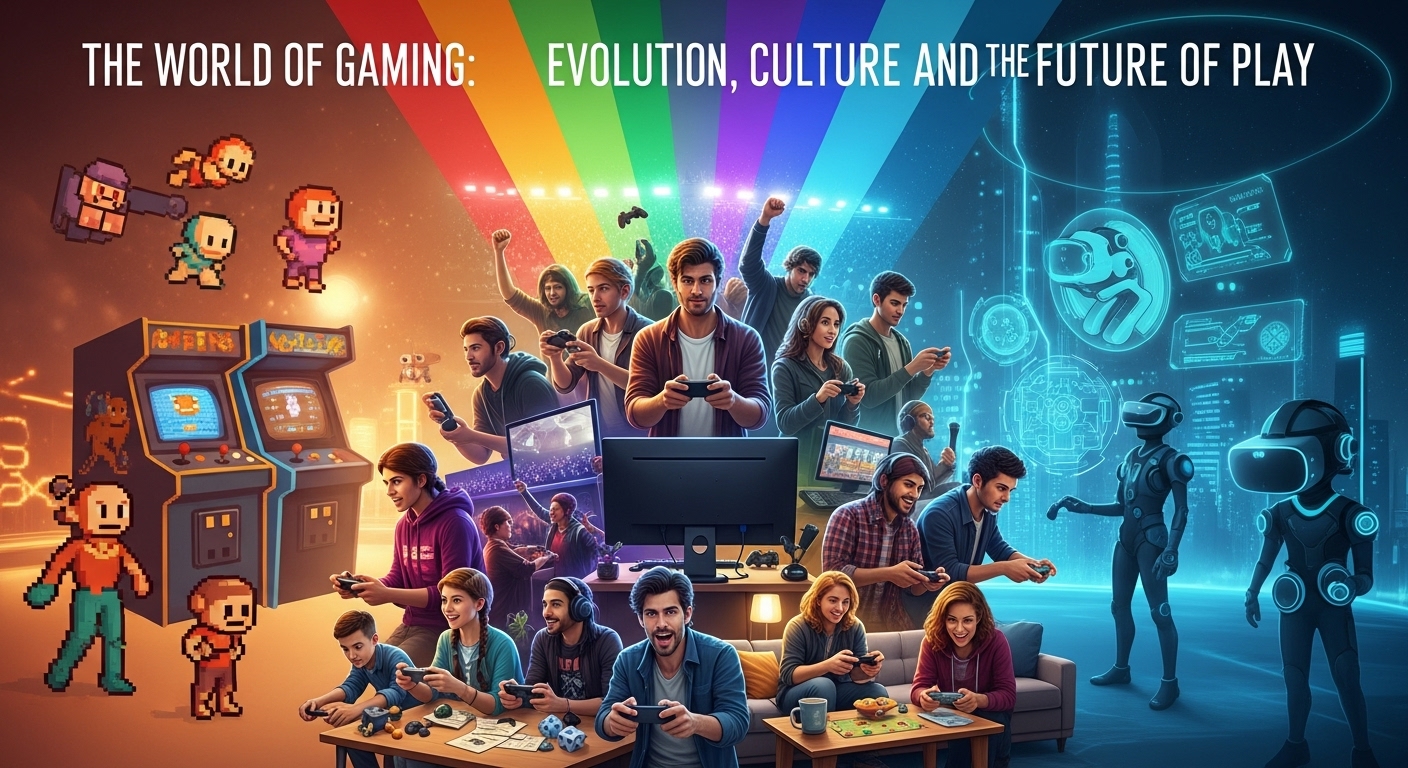
Gaming is no longer just a pastime. It has become a cultural revolution, a technological frontier, and a powerful storytelling medium that rivals movies and books in emotional depth and artistic creativity. What began as a few blinking pixels on a screen has evolved into sprawling virtual universes where millions of players connect, compete, and create. The journey of gaming is not merely about entertainment; it’s a story of human imagination, innovation, and interaction. From arcades to virtual reality, from simple mechanics to cinematic masterpieces, gaming has grown into one of the defining forces of modern life.
The Birth of Gaming: From Simple Codes to Global Phenomenon
The origins of gaming can be traced back to the 1950s and 1960s, when computers were massive machines used only for scientific and military purposes. The earliest games were experiments by curious engineers who wanted to see if these machines could do more than crunch numbers. One of the first examples was “Tennis for Two,” a simple tennis simulation created in 1958 by physicist William Higinbotham. It was followed by “Spacewar!” in 1962, designed by Steve Russell and others at MIT. These early creations laid the foundation for what would eventually become a multibillion-dollar industry.
By the 1970s, the gaming industry began to take shape with arcade machines like “Pong” capturing the public’s imagination. The idea that people could pay a small amount of money to play a video game in public places changed entertainment forever. Soon, companies like Atari, Nintendo, and Sega emerged, creating the first wave of home consoles. Gaming became more accessible, and with accessibility came popularity. The competitive and social nature of gaming started to flourish, with arcades becoming meeting points for youth culture around the world.
The Golden Age of Arcades and the Rise of Consoles
The late 1970s and early 1980s are often referred to as the golden age of arcade gaming. Titles like “Space Invaders,” “Pac-Man,” “Donkey Kong,” and “Galaga” were not just games; they were cultural icons. The flashing lights, the sound of coins dropping into machines, and the excitement of achieving high scores defined an era. Arcades became temples of skill and competition, where players could prove their mastery and earn bragging rights among friends.
Around the same time, home gaming began to evolve rapidly. The Atari 2600 brought arcade-like experiences to living rooms, while personal computers such as the Commodore 64 and Apple II allowed more creative and experimental forms of play. Then came Nintendo’s arrival with the NES in 1985, which transformed gaming into a family-friendly experience. Games like “Super Mario Bros.,” “The Legend of Zelda,” and “Metroid” set new standards for storytelling, design, and creativity. Gaming had become more than a fad—it was becoming part of everyday life.
The 1990s: The Birth of 3D and the Rise of Icons
The 1990s were a decade of transformation. With the introduction of 3D graphics, gaming took its first steps into immersive worlds. Titles such as “Doom,” “Quake,” and “Wolfenstein 3D” revolutionized the first-person shooter genre, pushing technical boundaries and influencing countless future games. The rivalry between Nintendo and Sega defined the early 90s, with Sonic and Mario becoming household names. The “console wars” of this era fueled innovation and fierce competition, giving rise to unforgettable gaming experiences.
The mid-to-late 1990s brought about the PlayStation revolution. Sony entered the gaming market and introduced CD-based gaming, allowing for more complex games with better sound, graphics, and storytelling. Games like “Final Fantasy VII,” “Metal Gear Solid,” and “Resident Evil” introduced cinematic storytelling and emotional depth to the medium. Meanwhile, PC gaming also evolved, with online multiplayer beginning to take shape through games like “StarCraft,” “EverQuest,” and “Counter-Strike.” The 1990s solidified gaming’s place in pop culture, merging technology and artistry in ways never before imagined.
The 2000s: The Online Era and the Expansion of Gaming Culture
As technology improved, the 2000s marked the dawn of online gaming as we know it today. Broadband internet allowed players to connect with others around the world, creating a new era of social interaction and competition. Consoles like the PlayStation 2, Xbox, and Nintendo GameCube offered more advanced experiences, while PC gaming saw an explosion in online communities. Games like “World of Warcraft,” “Halo 2,” and “Counter-Strike: Source” demonstrated that gaming was not just about playing—it was about connecting.
The 2000s also saw the rise of mobile and casual gaming. Titles such as “Angry Birds” and “Bejeweled” brought gaming to smartphones, opening the medium to a much broader audience. Suddenly, gaming was no longer just for the stereotypical “gamer.” Parents, grandparents, and even children could engage in gaming on their own terms. It became a universal pastime that transcended age and gender.
At the same time, storytelling in games reached new heights. “Grand Theft Auto III,” “The Elder Scrolls III: Morrowind,” and “Shadow of the Colossus” pushed the boundaries of open-world design and emotional engagement. Gaming began to rival Hollywood in scope and ambition, with developers crafting experiences that blended narrative, art, and interactivity in unprecedented ways.
The Rise of Esports and Streaming: A New Kind of Fame
As online multiplayer games grew in popularity, a new cultural movement began to take shape—esports. Competitive gaming, once limited to local tournaments, exploded into a global phenomenon. Games like “League of Legends,” “Dota 2,” “Counter-Strike: Global Offensive,” and “Overwatch” became spectator sports, drawing millions of viewers online and filling massive arenas. Esports professionals began to earn sponsorships, salaries, and fame comparable to traditional athletes.
Streaming platforms revolutionized the way people experienced games. Sites that allowed players to broadcast their gameplay created new forms of entertainment and community. The streamer became a new type of celebrity, blending gaming skill with personality and performance. This interactive form of media gave rise to an entire ecosystem of content creators who connected directly with fans, changing how audiences engaged with gaming culture.
The Artistic Evolution of Games: Storytelling, Music, and Emotion
As technology advanced, so did the artistic ambitions of developers. Games became recognized as a legitimate form of art, capable of exploring complex themes and emotions. Titles such as “The Last of Us,” “Journey,” “Bioshock,” and “Red Dead Redemption 2” showcased the power of storytelling in gaming. These experiences combined cinematic direction, character development, and immersive design to evoke genuine emotional responses.
Music also played a crucial role in gaming’s evolution. From the nostalgic chiptunes of the 8-bit era to full orchestral scores recorded by professional symphonies, gaming music became iconic in its own right. Soundtracks from series like “Final Fantasy,” “Halo,” and “The Legend of Zelda” achieved recognition beyond the gaming world, illustrating the depth and artistry of interactive entertainment.
Gaming also began to embrace diversity and representation, telling stories from different cultural perspectives and giving voice to underrepresented communities. Indie developers led much of this charge, creating personal and experimental games that challenged conventions. The result was an explosion of creativity that expanded the boundaries of what gaming could be.
The Age of Immersion: Virtual Reality and Beyond
With the arrival of the 2010s and beyond, gaming entered the age of immersion. Virtual reality (VR) and augmented reality (AR) technologies allowed players to step directly into digital worlds. Devices such as the Oculus Rift, PlayStation VR, and HTC Vive transformed the way people interacted with games. Suddenly, players were not just controlling characters—they were living within the game itself.
The introduction of VR and AR also opened the door for new genres and experiences. Games like “Beat Saber,” “Half-Life: Alyx,” and “Superhot VR” showcased the potential of immersive gameplay. Meanwhile, AR titles such as “Pokémon GO” blurred the lines between the virtual and real worlds, turning city streets and parks into playgrounds.
Beyond VR, advancements in graphics engines, artificial intelligence, and procedural generation made games more dynamic and lifelike than ever. Characters could react intelligently, worlds could evolve organically, and player choices could shape entire storylines. Gaming had reached a point where the only limitation was imagination.
Gaming as a Social and Economic Powerhouse
Gaming is no longer a niche hobby—it is one of the largest entertainment industries in the world. It surpasses film and music in revenue and employs millions of people across development, marketing, media, and esports. The economic impact of gaming extends far beyond the sale of consoles and games. Streaming, merchandise, content creation, and competitive events contribute to a thriving ecosystem that drives innovation and creativity.
Socially, gaming has become a global language. It connects people from different backgrounds, cultures, and countries. Online communities, guilds, and co-op games encourage teamwork, communication, and friendship. During times of global crisis, such as the pandemic, gaming provided a way for people to stay connected and engaged when physical interaction was limited. It became not just a source of entertainment but a form of companionship and escape.
The Psychology of Play: Why We Game
Understanding why people play games is as fascinating as the games themselves. At its core, gaming taps into fundamental aspects of human psychology—curiosity, challenge, achievement, and social connection. Games offer structured experiences that reward effort and creativity. They allow players to experiment, fail, learn, and improve in a safe environment.
For many, gaming provides a sense of control and purpose that may be lacking in the real world. For others, it’s about storytelling, exploration, or simply fun. The interactive nature of gaming makes it a unique medium for self-expression. Players can become heroes, creators, strategists, or storytellers. The freedom to choose and influence outcomes is what makes gaming so deeply satisfying and personal.
The Dark Side of Gaming: Challenges and Controversies
No discussion about gaming would be complete without acknowledging its challenges. Like any major industry, gaming faces issues such as addiction, toxicity, and exploitation. Excessive play can lead to unhealthy habits, while online spaces sometimes harbor harassment and discrimination. The monetization of games through microtransactions and loot boxes has also sparked debates about ethics and fairness.
Developers and communities are increasingly working to address these issues through moderation tools, education, and healthier design philosophies. The conversation around gaming addiction has prompted researchers to explore the balance between engagement and compulsion. The future of gaming depends not only on technological advancement but also on creating positive, inclusive environments for all players.
The Future of Gaming: Innovation, AI, and Boundless Creativity
Looking ahead, the future of gaming promises even more innovation and integration. Artificial intelligence is beginning to play a larger role in how games are designed and experienced. AI-driven characters can adapt to player behavior, creating more personalized and dynamic interactions. Procedural generation will continue to expand the scale of virtual worlds, allowing for infinite exploration.
Cloud gaming is another major frontier, enabling players to stream high-quality games without the need for powerful hardware. This democratization of gaming could make cutting-edge experiences available to anyone with an internet connection. Combined with the rapid growth of mobile gaming and cross-platform play, the industry is becoming more inclusive and connected than ever before.
The blending of gaming with other technologies—such as blockchain, haptic feedback, and brain-computer interfaces—hints at experiences we can scarcely imagine today. Games will not only entertain but also educate, train, and inspire. From medical therapy to virtual classrooms, the potential applications of gaming extend far beyond traditional play.
Conclusion: Gaming as the Language of the Future
From its humble beginnings as a curiosity of early computer science to its current position as a cultural and technological titan, gaming has traveled an extraordinary path. It reflects our desire to explore, compete, create, and connect. It’s a space where art meets technology, where imagination meets interactivity. The beauty of gaming lies in its diversity—there is something for everyone, whether you seek adventure, challenge, storytelling, or community.
As the line between the virtual and real worlds continues to blur, gaming will only grow in significance. It is not just the future of entertainment; it is the future of human expression. The next generation of gamers and creators will continue to push boundaries, crafting worlds that inspire wonder and unite people across every corner of the globe. Gaming is not simply a pastime—it is the pulse of modern culture, and its story is far from over.